Friday, 18 January 2019

Welcome.

Welcome to the town of Kediri.

Kediri is a city that has a variety of natural and culinary features that can greatly enjoyed by the family.

Nature tourism Kediri city include :

1. Maria Lourdes Cave.


2. Cave Selomangleng.

Selomangleng cave.

3. Dolo Waterfall.

4. Simpang Lima Gumul.

Munumen Simpang Lima Gumul.

5. National Hotel and the beauty of virtue Kelud Kediri.
The culinary, every night along the way Dhoho available culinary vendors needed to visit with family. Typical special menus are available for the town of Kediri is Pecel Mixed Rice. Thank you for reading this article.
Written and posted by Bambang Sunarno. sunarnobambang86@gmail.com
author:
http://schema.org/Personal.
https://plus.google.com/105319704331231770941.
name: Bambang Sunarno.
http://www.dynastyc.blogspot.com/2014/p/welcome.html
DatePublished: October 12, 2014 at 10:08
Bambang Sunarno.
Tag : Welcome.


Signature Bambang Sunarno.

Monday, 26 January 2015

Karen Padaung Thailand.

the Karen Padaung Thailand.
The look plain and unpretentious women scattered Karen Padaung Tribe (Tribe Kayan) will you reply with a strange look, amazed and curious to see how long their necks and imagine how he passes his days with the encumbered amount of metal rings on the neck, feet and ankles their hands. That is what would you feel if you visit the Karen tribe village in Thailand. The reason they wear bracelets that was fairly unique. It was said that they wanted to be like the phoenix.

In Maehongson province north of Bangkok, Thailand, there lived some mountain tribes from Burma or Myanmar. Among the Akha Tribe, Tribe Karen, Lisu tribe and so on. They are a community of tribes who had a background in history and unique culture.

But among the tribes, the Karen tribe is considered the most unique. In the women's neck Karen tribe mounted gold-plated metal bracelet. These bracelets functions to form their necks and legs that are longer, because according to their custom, the longer the female neck then they will be considered increasingly look gorgeous.

The more unique no reason they wore their rings hereditary cultural background as well as the belief that women are from a tribe Karen Bird Phoenix. For the Karen tribe, the phoenix is a female ancestor who paired with the dragon is regarded as ancestors of the men of the tribe.

Heavy iron rings on the neck of adult women up to 5 kg and below the knee anklet each weighing 1 kg. Means that every day they bring a load of 7 kg.

The bracelet began applied since they were 5 years old. Initially only 2-3 stack bracelets, and every 2-3 years pile bracelets plus until they reach the age of 19 years where the rings had been replaced with iron rings made from one long iron stick shaped circular / wrapped around their necks. The bracelet can be removed but the process itself is not easy to release and only made upon marriage, birth and death.

Heavy rings, push the collarbone, shoulder bones and ribs down. Thus automatically neck elongated karen women. The longer, they feel more and more like the Phoenix Bird of their ancestors.

Another function of the rings that are as protective. Back when they were still living in the hill country, they often engage in contact with wild animals such as tigers, bears and so on. Generally, wild animals attacking humans on the neck and throat. For that rings so that serves as a protective for women Karen tribe.

The uniqueness of the Karen tribe used with "excellent" by the Thai tourism industry. They are placed in several villages including, Huay Pu Keng, Shuah Huay Thoh, Kayan Pu Keng and so on. These villages are promoted as one of the unique culture of Thailand. The tourists who visit to see the uniqueness of the Karen tribe charged a fee of $ 10 US.

To help the family income, Karen Tribe woman also sells various kinds of handicrafts typical of the tribe. For example, Karen Tribe woven fabric that is quite popular and photographs showing their daily activities including the release process bracelet neck. While men daily work in the fields from dawn till dusk.

But the uniqueness of the Karen tribe woman not without risk. The women in this tribe mostly live until the age of 45-50 years. Reportedly because of heavy bracelet that reach 7 kg, is believed to have damaged the neck bones as they age. World tourism is often blamed for the recent encouraging the use of the neck ring. Reason tourism industry to do that of course because the Karen tribe is a popular attraction for tourists. That means to provide income that does little for the tourism industry of Thailand.

Tribal Wasted.

Karen tribe and other tribes in Maehongson is inland tribes of Myanmar. They are hill tribes who live in the forests surrounding the Thai-Myanmar border. Original villages in the corners of Myanmar, as well as the provinces of Chiang Rai, Mae Hong Son and Chiang Mai (sometimes moving).
In 1949 the civil war raging forcing them to flee. Karen National Union and the guerrilla group of other minority ethnic groups fighting the government Mynmar. Since the 80s to the present military Mynmar successfully evict residents from 3 thousand villages belonging to the Karen tribe. The tribes were climbing a mountain pass through the border and stay in the province of Maehongson.

This wasted tribe living as refugees without identity in Thailand. Based on the report of UNESCO in 2008, nearly two million people who live in the hill tribes of Thailand did not have identity cards.
It is said, nearly 70 percent of them can not get basic education as other Thai children, and 98 percent could not get a higher education. Thank you for reading this article. Written and posted by Bambang Sunarno.
sunarnobambang86@gmail.com
author:
http://schema.org/Personal.
https://plus.google.com/105319704331231770941.
name: Bambang Sunarno.
http://dynastyc.blogspot.com/2015/01/karen-padaung-thailand.html
DatePublished: January 26, 2015 at 18:06
tags: Karen Padaung Thailand.


Togutil ethnic origin in Halmahera.

Tribe Togutil On Earth
Starting from a point in looking for spices, ground Maluku famous for cloves and nutmeg became the target of the last European nation vying come to master.

In 1546, the Portuguese began combing every coast and islands in North Maluku earth. Gulf Galela not miss. In 1570 Sultan Khairun poisoned by the Portuguese while hold talks. His son, Sultan Babullah vowed to expel the Portuguese out of their strongholds and aggressively targeting and pounding each noteable Portuguese stronghold Mamuya not recorded in history.

These events take their toll on the Portuguese. Aid ships coming also not be separated from the target. One of the great ships that sailed down times Tiabo, at that time most of the valley Galela still flooded, finally sank in the area Dokulamo positioned at 3 Km from time Tiabo and 9 km from the beach. Eyewitnesses and owner of the land, Alm. Julian Senyenyi, never tells that when he was treating the land he discovered the wreck of a length of 30 fathoms, or about 45 meters and a width of 9 fathoms (15 meters).

Unfortunately the wreck wreckage burned up most of the iron rust and has been transported to nothing left anymore. Where he sank even now planted with coconut. The area by the villagers Dokulamo called Kakapal area.

The Portuguese vessel into the upstream Tiabo to avoid pursuit Korakora forces Sultan of Ternate. Unfortunately they are unfortunate because even managed to escape but the troops inland Alifuru Galela been waiting. Battle became inevitable again.

In the first attack, the Portuguese troops with weapons with them successfully takes a lot of casualties Alifuru. This forced the retreat while Alifuru to set the power and new combat tactics.

The second attack was carried out, but this time no longer use physical force and armed. Alifuru forces using bees as the power to paralyze the enemy. This attack makes the Portuguese troops who were both on board and ashore into a frenzy when the bees come from different directions to attack them.

These bees sting had caused many casualties among the Portuguese. Rescue efforts carried out with fire and brimstone, and counterattack with indiscriminate gunfire, make Alifuru troops retreat and avoid stray bullets. Alifuru troop pullback used by the Portuguese to leave the ship and the area Dokulamo heading south. They settled in the area of Mount Hum and then called the Rum area which suggests that the region is home people from Romanic.

The Portuguese in the area Hum / Rum can not live in peace because people Galela often disturb their peace. They were then chose to move to the area to keep the mound Karianga Tobelo the south area Wangongira, Kusuri, Kao valley, river rod toward Tetewang Jodo times. This displacement bring them together with fellow countrymen the same fate around Pasir Putih shipwrecked.

Most of them settled and integrated with the local community. To remove traces as they are learning the Portuguese language and strive Tobelo eliminate language accents. They then walked with the Tobelo and Kao who is ultimately make most people Togutil communicate using language Tobelo Boeng and Modole. These efforts are made to avoid the pursuit of Ternate and Alifuru troops against the remnants of the Portuguese in North Maluku which ran into the woods.

In its development, the Portuguese was then living in a way to move into areas that they consider to be safer while still breed. Their population is known to occupy the forest in the southern North Halmahera to Wasilei forest in East Halmahera. They are happy to live on the shores of the river. Their house made of logs or leaf thatch roofed leaves woka without walls. Their diet is by eating raw or cooked by fire with bamboo. Most of their drinking water directly from the river.

Stature Togutil tribes who have intermarried is like the Portuguese in general. They are tall and big, white and sharp nose. Their daughters were beautiful with eyeball-gray colored nodes. Their lifestyle is still very dependent on natural products. Eating of fruits, tubers, buds and young leaves of bush forest animals and fish the river.

Their dependence on nature makes them have a nomadic lifestyle. After supply of tubers and fruits and animals is reduced they will move to a new area. So that they became known as the Halmahera forest owners considering that they are the first to explore and forests occupy Halmahera.

Togutil tribes living patterns that have been mingled with the community can be seen from their ability to cultivate tubers and fruits as well as an annual plant that lives no longer move where. They also can use agricultural tools and dress well.

Togutil tribe tribes but now is not more of an indigenous forest dwellers Halmahera. Need attention, awareness of the various parties to raise the dignity of their lives like other Halmahera society. The trick is not to build housing for those on shore and then force them out of the forest so that we can rob all forest wealth they have left without consideration of causation.

Houses are built will remain empty because basically they are not coastal. Forests are living palace while the coast is a catastrophe of life for those who are called Togutil. Thank you for reading this article.
Written and posted by Bambang Sunarno. sunarnobambang86@gmail.com
author:
http://schema.org/Personal.
https://plus.google.com/105319704331231770941.
name: Bambang Sunarno.
http://dynastyc.blogspot.com/2015/01/togutil-ethnic-origin-in-halmahera.html
DatePublished: January 26, 2015 at 17:44
tags : Togutil ethnic origin in Halmahera.


Aboriginal history.

Australia is the sixth largest country in the world in terms of breadth, is smaller when compared with Russia, Canada, China, United States, and Brazil. Australia is the smallest continent, while the largest is Asia which covers 44.614 million km2. Humans have long inhabited Australia once. The original inhabitants of Australia called Aborigines. In Latin the word 'Aboriginal' means 'from the beginning'.

Aboriginal and Torres Strait Islander is a tribe of Indigenous Australians. They've lived and maintain both the homeland of Australia for nearly 60,000 years using the legal system and their own government. That said, they settled on the smallest continent for thousands of years ago. But then they were displaced by the nation of immigrants who are more "intelligent" white of Europe.

Aborigines in Australia.

One of the famous culture of the Aborigines are hunting weapons that often they use, namely Boomerang. This weapon is unique because once thrown away, can come back again, this weapon is often used for hunting in the forest or desert savanah. In everyday life Aboriginal indeed spent to hunt wild animals like kangaroos (typical Australian animals), in addition to using Boomerang they also use traditional weapons such as spears and arrows.

In the winter when the Aborigines used clothing made from kangaroo leather. For Aboriginal people who still live traditionally, they have never known farming and raising livestock, which is why the group they never go far from water sources and rivers. Homes that have been are nomanden or sedentary, home made is very simple and only made of twigs and leaves in stacking.

In the sociable life among tribes, an Aboriginal group headed by a tribal leader, chairman of the tribe also doubled as a shaman or healer, and co-led the traditional rituals and weddings.

Aborigines themselves divided into many groups according to the area they live in, including the Aboriginal Bama in the region of Queensland, Aboriginal Koori in the area of the New South Wales and Victoria, Aboriginal Murri in the region of southern Queensland, Aboriginal Noongar in the south western part of Australia, Aboriginal Nunga in region of southern Australia, Aboriginal Anangu in the area near the border of southern and western Australia, as well as Aboriginal Palawah who lived on the island of Tasmania. Most Aboriginal communities are Aboriginal Anangu which has a population of 32.5% of all Aboriginal people in Australia, but if calculated overall with the Australian Aboriginal population numbered only 517 000 inhabitants and if the percentage is only 2.3%.

Had been a discrimination of the people of Europe against Aboriginal tribe, even Aborigines often regarded as the Fauna / animals, but gradually discrimination while gradually softened, and one of the political strategy for Aboriginal problem is with the process of assimilation between blacks and whites black Aborigines. Mixed marriages, many make their children become no longer black, even for future generations increasingly white together with the Europeans.
Thank you for reading this article. Written and posted by Bambang Sunarno. sunarnobambang86@gmail.com
author:
http://schema.org/Personal.
https://plus.google.com/105319704331231770941.
name: Bambang Sunarno.
http://dynastyc.blogspot.com/2015/01/aboriginal-history.html
DatePublished: January 26, 2015 at 17:09
Tags : Aboriginal history.

The most dangerous train.

Train is a means of transportation in the form of kinetic energy of the vehicle by either walking alone or coupled with other vehicles, which will or is moving on rails. By way of a typical path traveled by train fun, but traveling by train sometimes also be stressful when passing through these routes are dangerous, when Train runs on a very high bridge, wobble deeply felt, even in some countries there is a route that is actually very dangerous because due to extreme territory or too old rail itself.

These rail route in the world's most dangerous among them:

Kuranda Scenic Railway, Australia.

Scenic means beautiful but also has a confusing way. Etched in dense tropical rain forest since the late 1800s, this train has the usual outer frame. These routes pass through the waterfall sometimes droplets of water splashing against the rail. This train circling almost the entire Barron Gorge National Park.

Argo Gede Train Railroad, Indonesia.

During the three-hour trip from Jakarta to Bandung will pass through the beauty of the green mountains, through the river valley, and the most amazing tunnel you will pass Cikurutug high bridge overlooking the green expanse that looks amazing and so soothing, like khabuka feel when returning, and for this there is also very uphill (to measure rail) in Nagreg, here trains will run very slowly when the train runs from Garut to Bandung.

Outeniqua Choo Tjoe Train, South Africa.

At the beginning of the opening of the railway in 1908 was no accident that caused the wood falls along the railway line of fire. Although now with more secure, passengers will still take a deep breath when passing Kaaimans bridge stands on the Indian Ocean.

The Cumbres & Toltec Scenic Railroad, New Mexico.

This practice can cause headaches for passengers, since 1880. Departing from the northern town of Chama, trying to balance the train through a long track frame, passing through the narrow ledge to the park 800 feet Toltec, and winds of more than 10,015 feet in Gap Cumbres.

 Las Nubes, Argentina.

Although the rail service that connects Salta (north-central Argentina) to La Polvorilla (on the border of Chile) has been approved for construction since 1921, but finally finished in 1948, the year that long to be resolved. Passengers should try to feel the track through 21 tunnels, 13 bridges over the road, past the many spiral and zigzag lines.

Lynton &. Lynmouth Cliff, England.

Passengers can feel scary thing when traveling on the train the name of this song. According concise, short and sweet of a roller coaster as steep slopes and cliffs 500 meters walking in coastal towns southwest.

Route Chennai-Rameswaram, India.

To reach the island of Rameswaram in the southern coast of India, Society should use a train that passes dangerous. Paths created in 1914, has a length of 1.4 miles. And the most frightening thing is this line through the middle of the range of hazardous

White Tickets & Yukon Route, Alaska.

Built during the Klondike Gold Rush steam railway in 1898. It is for the traveler who becomes the object of thrill seekers. This "more than clinging to the cliff", visited by more than 450,000 visitors per year with cliffs up to 3000 meters as far as 20 miles. And has been immortalized in a song "International Historic Civil Engineering Landmark".

Georgetown loop Railroad, Colorado.

At the end of the 19th century, as part of northwest Colorado is full of silver mines, steam train is the only access. The most frightening thing is that passengers must pass through the Devils Gate Bridge height of 100 meters, and while on the bridge, the train will pass slowly as if not able to withstand the load.

Minami Aso route, Japan.

The most horrific train is in the area of the most active volcanoes and Japanese visitors do not know when it will erupt. The mountain tourists prefer to come in early November when a forest fire near the train successfully burned by hot magma activity of the volcano Aso.  Thank you for reading this article.
Written and posted by Bambang Sunarno. sunarnobambang86@gmail.com
author:
http://schema.org/Personal
https://plus.google.com/105319704331231770941.
name: Bambang Sunarno.
http://dynastyc.blogspot.com/2015/01/the-most-dangerous-train.html
DatePublished: January 26, 2014 at 16:35
Tags : The most dangerous train.

Tuesday, 25 November 2014

Codex Gigas.

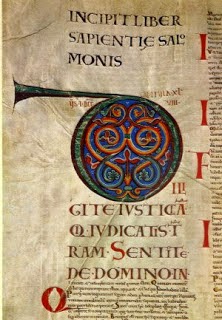
Codex Gigas is the greatest of medieval manuscripts. This text is also known as the Devil Bible as a great illustration devil in the legend surrounding its creation. Codek gigas in the suspect was created in the early 13th century.
At Abbey Podlažice Bohemia (Czech Republic now). This manuscript contains scripture Vulgate and many historical documents are all written in Latin. During the Thirty Years' War in 1648, the entire collection in looted by the Swedish army as spoils of war, and is now kept in the National Library of Sweden in Stockholm.

Codex Gigas

Codex Gigas is the largest medieval manuscript in the world. This manuscript is stored in a folder wood covered with leather and metal engraved. At 92 cm (36.2in.) High, 50cm (19.7in.) Width and 22 cm (8.6in.). It weighs 74.8 kg (165 pounds), consisting of 310 pieces were allegedly made of leather 160 donkey or maybe calfskin. This text was originally contains 320 sheets, but somehow a few sheets of this manuscript has been removed. It is not known who delete pages or for what purpose but it seems possible that manuscript contains the rules of the Benedictine monastic.


Gigas Codex
The contents of this codex is "a sum of the Benedictine order's knowledge",
"The War of the jews" Josephus, a list of the saints, the method for determining the date of the celebration of Easter, the whole bible latin pre-vulgate, Isidore of Seville's encyclopedia Etymologiae, Cosmas of Prague's Chronicle of Bohemia, the various treaties (of history, etymology and physiology), a calendar with nekrologium, list the names of the monks in the monastery Podlaice, magic formulas and other records. Manuscript illumination decorated in red, blue, yellow, green and gold. Elaborate letters often encountered throughout the page. The contents of this manuscript has an integrated display properties that do not change throughout the writing, does not show signs of age, illness or mood change on the part of the author, it's making the experts concluded the entire manuscript is written in a very short time. But scientists have also found unique facts in relation to the theory, that it took more than 20 years to complete this manuscript.
On page 290 there is a unique image of the devil, with a size of about 50 cm. A few pages before this was written on a sheet of blackened and have a very gloomy character, somewhat different from the other contents of the codex. Right on the sheet next to the image devil is a full picture of the kingdom of heaven, juxtaposing the "goodness opponent evil".

goodness opponent evil

According to the Legend, the author of the codex was a monk who violate the rules of the monastery and punished with fastened on the wall in a standing position for life. This monk seeking forgiveness from extraordinary punishment cruel. Instead he promised to create a book that would glorify the monastery and the knowledge of mankind forever, and he promised to finish in just one night. But towards the middle of the night, the monk into doubt whether he can finish his own. Then he sold his soul for the sake of a relief. He made a special prayer, but not addressed to God but to the angel Lucifer (Satan), the devil then finish the manuscript. A tribute to the devil who helped him, the monk added the devil image into the manuscript. Despite the legend that involves the devil, in the days of the Inquisition, this manuscript was kept by the monastery and studied by many scholars to this day. Even some experts continue to learn about the time needed to write this manuscript. Thank you for reading this article.
Written and posted by Bambang Sunarno. sunarnobambang86@gmail.com
author:
http://schema.org/Personal.
https://plus.google.com/105319704331231770941.
name: Bambang Sunarno.
http://www.dynastyc.blogspot.com/2014/11/codex-gigas.html
DatePublished: November 24, 2014 at 10:55
Tag : Codex Gigas.

Strange building architecture.

Architectural history enriched with outstanding design. Many enduring record set by architecture. Most of the construction work is still a fabulous excuse for the world. This structure makes the imaginative always fascinated with the unique and outstanding design. Some amazing and spectacular buildings from all over the world different from the others and very remarkable.

The Baha'i House of Worship aka Lotus Temple.

The Baha'i House of Worship aka Lotus Temple.

Architect: Fariborz Sahba
Location: Delhi, India
Year of construction: 1986
Different features: such as lotus structure
It is the mother temple of the Indian subcontinent which was completed in 1986, called the temple because it is shaped like a lotus flower. All people regardless of their religion can visit this place. It is one of the popular places in Delhi, India. The building is popular among architecture experts for outstanding design and has won many awards. The basic architecture of the building was developed on the basis of the Baha'i scriptures determined by Abdul Baha'i, children fonder of the Baha'i religion.

Ripley Building.

Ripley Building.

Founder: Robert Leroy Ripley
Location: Ontario Canada
Year of construction: 2003
In contrast Features: Cracks in buildings
It is an unusual building that was the headquarters of a famous television program "Ripley's believe it or not". It is filled with all the strange and confusing artifacts from around the world. The uniqueness of the building is that it looks like the building cracked by storm. Located in Ontario, Canada. The building design is actually created to reflect the odd 1812 earthquake that measured 8.0 on the Richter scale. It is one of the most photographed buildings of foreign tourists or local tourists also the surrounding community.

Crooked House.

Crooked House.

Architect: Szotynscy Zalesk
Location: Sopot, Poland
Year of construction: 2004
Different features: As the picture fairytale
It is a building inspiration from children's illustrations in fairy tales. Szotynscy Zalesk is the designer of the structure awesomely unusual. Built in 2004. There are a number of pubs and restaurants in the building. It is a three-story building with a magical display. Having shades of green on a curved roof. The building which was inspired by Swedish painter painting and drawing has some amazing features that attract the attention of passers-by.

The device to repel Root of Evil.

The device to repel Root of Evil.

Architect: Dennis Oppenheim
Location: Vancouver, Canada
Year of construction: 1997
Different features: the church Reversed
Device to eradicate crime is located in Vancouver, Canada. Dennis Oppenheim who is internationally renowned artists in the form of an exclusive structure of the building. It gives the image of the church upside down and it seems as great powers are removed. Architects faced much controversy as it was first exhibited at the Venice biennale and then wake up in Vancouver. However, it is part of an amazing design and capture the attention of people around the world. Without a doubt it is exclusive in design and a great example of modern art and contemporary architecture.

Dancing Building.

Dancing Building.

Architect: Frank Gehry and Vlado Milunic
Location: Prague, Czech Republic
Year of construction: 1996
In contrast Features: Curvy lines
Amazing building that was built on the banks of the Vltava River in Prague, also known as Fred and Ginger. Interesting design created by Frank Gehry and Vlado Milunic. It was designed in 1992 and completed in 1996. The initial name of the building was inspired by the legendary dance duo. Building dancing is the nick name given because of line dancing and curves. Several multinational companies have their offices in it including a French restaurant that occupies the upper floors. Despite all the controversy faced because of the design of non-traditional, but very worthy to shake the world of architecture.

Bund UFO House.

Bund UFO House.

Owned by: Hung Kuo Group
Location: Taipei, Taiwan
Year of construction: 1978
In contrast Features: Pod Shap
UFO house which is also known as the Bund Bund UFO built in the new district of Taipei, Taiwan. It is home podded and has similarities with Futuro houses. UFO home construction began in 1978. There is a development of holiday resort is intended to provide the US military officer but later it was converted into a commercial seaside resort for tourists. The main reason for the change in the program is due to some unfortunate events that occurred during construction. But now the hottest spot for tourists because of its bizarre architecture.

Ferdinand Cheval Palace aka Ideal Palace.

Ferdinand Cheval Palace aka Ideal Palace.

Architect: Ferdinand cheval
Location: Hauterives, France
Year of construction: 1879
Different features: different Architecture Culture Molded into a palace
The naive art remarkable monument of Ferdinand cheval palace located in Hauterives, France. It is the creation of a French postman Ferdinand cheval. Postman began to build in 1879 and spent 30 years in the development of this ideal palace. The amazing thing about this palace is that Ferdinand cheval ideas extracted from the rock. This work is a mixture of Christian inspiration from style to style Hindu buildings. The palace was built with stone, lime, cement and mortar. Cheval is also buried in the palace.

Forest Spiral Hundertwasser Building.

Forest Spiral Hundertwasser Building.

Architect: Heinz M. Springmann
Location: Darmstadt, Germany
Year of construction: 2000
Different features: Forest spiral like prairie hike and has more than 1000 windows, each of which has a different style. This building is the center of attraction for people from all over the world because of the unusual architecture. It is complex and contains 105 units lodging house. It is located in an area Burgerpark in Darmstadt, Germany. This building has a spiral structure afforested. It is constructed such that it looks like a meadow keep climbing. This is a twelve-storey building. Brilliant designs created by Friedensreich Hundertwasser, a famous painter from Australia. Beautiful courtyard of the building has a running stream that adds exquisiteness in a spectacular building.

Guggenheim Museum, Bilbao, Spain.

Guggenheim Museum, Bilbao, Spain.

Architect: Frank Gehry
Location: Abando, Bilbao, Spain
Year of construction: 1997
Different features:
Structures such as ships
This building is the work of contemporary art located in Bilbao, Spain. Guggenheim Museum designed by American architect Frank Gehry Canada. Established in mid-October 1997. The silhouette of the building has a resemblance to a ship. This ship is like a museum built alongside the Nervion River. The building is also in the list of the most important works of art is achieved in three decades of 1980-2010 in the "Survey of World Architecture". The design of the testimony were randomized according to the architect intended to catch the light.

Cubic Houses.

Cubic Houses.

Architect: Piet Blom
Location: Rotterdam and Helmond, Netherlands
Year of construction: 1974
In contrast Features: Cubic shape
Cubic house built in Rotterdam and Helmond in the Netherlands. They are designed with the concept of "life as an urban roof". Very unique home design where each house represents a tree and houses all together make a forest. Houses were tilted to 45 degrees and is built on a hexagon-shaped pylon. Piet Blom was the architect of a unique structure. The houses were originally built in Helmond later native of Rotterdam is also blessed with an incredible forest of cubic houses. Thank you for reading this article.
Written and posted by Bambang Sunarno.  sunarnobambang86@gmail.com
author:
http://schema.org/Personal.
https://plus.google.com/105319704331231770941.
name: Bambang Sunarno.
http://www.dynastyc.blogspot.com/2014/11/strange-building-architecture.html
DatePublished: November 24, 2014 at 10:27
Tag : Strange building architecture.

Monday, 24 November 2014

Did you know Bugis.

Suku Bugis.
Bugis an ethnic group with origins in South Sulawesi region. Primary identifier of this ethnic group is the language and customs, so that the Malay and Minangkabau settlers who migrated to Sulawesi since the 15th century as administrative staff and traders in Gowa and been acculturated, also categorized as the Bugis. Based on the Indonesian population census of 2000, the population of the Bugis by approximately six million people. Now the Bugis people also spread in various provinces of Indonesia, such as Southeast Sulawesi, Central Sulawesi, Papua, East Kalimantan, South Kalimantan. The Bugis are also many who migrated to foreign countries.

History.

Beginning.

Bugis is a tribe belonging to the Deutero Malay tribes. Go to the archipelago after the first wave of migration from mainland Asia rather Yunan. The word "Bugis" is derived from the Ugi, which means the Bugis. Naming "Ugi" refers to the first king of the Chinese empire contained in Pammana, Wajo today, namely La Sattumpugi. When the people of La Sattumpugi calling itself, then they refer to their king. They called him as Ugi or people or followers of La Sattumpugi. He is the father of Sattumpugi We Cudai and siblings with Batara Lattu, father of Sawerigading. Sawerigading itself is the husband of We Cudai and gave birth to several children, including La Galigo that make the greatest literature in the world with approximately 9,000 folio pages. Sawerigading Opunna Ware (lordship in Ware) is a story set in the literature I La Galigo in Bugis society tradition. Acts Sawerigading also known in the local tradition Luwuk, Kaili, Gorontalo and some other traditions such Sulawesi Buton.

Developments.

During its development, the community is growing and forming several kingdoms. This community then develop the culture, language, literacy, and their own government. Some classic Bugis kingdom among others Luwu, Bone, Wajo, Soppeng, Suppa, Sawitto, Sidenreng and Rappang. Although the spread and form Bugis, but the marriage caused by blood ties and Mandar Makassar. Currently Bugis people scattered in several districts namely Luwu, Bone, Wajo, Soppeng, Sidrap, Pinrang, Barru. The transition between the Bugis Makassar is Bulukumba, Sinjai, Maros, Pangkajene Islands. Bugis transition area with Mandar is policing and Pinrang District. Luwu Kingdom is considered the oldest kingdoms along the Chinese empire (which later became Pammana), Mario (later to become part Soppeng) and afternoon (local in Pangkajene Islands)

Royal past.

Bone kingdom.

In the area Bone chaos for seven generations, which then appears a known Manurutng To Manurungnge ri Matajang. Seven small kings swore Manurungnge ri Matajang as their king and their Arumpone name into the legislative body known as ade pitue. Manurungnge ri Matajang also known as Mata Silompoe. The ade 'pitue consists of matoa ta, matoa tibojong, matoa Tanete Riattang, matoa Tanete riawang, matoa macege, matoa ponceng. matoa term later became whitewater. after Manurungnge ri Matajang, Bone kingdom led by his son, namely La Ummasa 'Petta Panre Bessie. Then nephew La Ummasa 'son of his sister who married the king Palakka born La Saliyu Kerrempelua. during Arumpone (the title of king of bone) of this third, Bone massively expand its territory to the north, south and west

Makassar Kingdom.

In the 12th century, 13, and 14 stand kingdom of Gowa, Soppeng, Bone, and Wajo, which begins with a social crisis, where people eat each other like fish. Kingdom of Makassar (Gowa) later founded the kingdom companion, the kingdom Tallo. But in the development of this twin kingdoms (Gowa and Tallo) back coalesce into kingdoms Makassar (Gowa).

Soppeng Kingdom.

In times of turmoil, in Soppeng appeared two people To Manurutng. First, a woman known by the name Manurungnge Goarie ri ri who then ruled Soppeng Aja. and second, a man named La Temmamala Manurungnge Sekkanyili ri ri Soppeng ruling in Lau. Finally, these two kingdoms into a Kingdom of Soppeng twins.

Wajo Kingdom.

While royal Wajo come from the communes of different directions that gathered around the lake Lampulungeng led by a person who has a supernatural ability called puangnge ri lampulung. After the death of him, the move to Boli commune led by someone who also has a supernatural ability. Lapaukke arrival of a prince of the kingdom of China (Pammana) some time later, and then build the kingdom Cinnotabbi. For five generations, this empire broke up and formed Wajo Kingdom. Kingdom of the pre-Wajo Cinnongtabi led by each: La Paukke White Cinnotabi I, II Cinnotabi We Panangngareng Whitewater, Whitewater Tenrisui We Cinnotabi III, La Patiroi White Cinnotabi IV. thereafter, two sons served as well as rafting Cinnotabi V, namely La Tenribali and La Tenritippe. After experiencing a crisis, the remnants of royal officials and citizens agree Cinnotabi chose La Tenribali as their king and established a new kingdom that Wajo. As for the king holds Batara Wajo.
Wajo led by, La Tenribali Batara Wajo I (former whitewater cinnotabi V), then La Mataesso Batara Wajo II and La Pateddungi Batara Wajo III. At the time, there was a crisis even Batara Wajo III was killed. power vacuum led to the birth of La Paddeppa agreement containing rights Wajo independence. thereafter, the title of king Wajo no longer Batara Wajo but White Matowa Wajo to any of the Unitary Republic of Indonesiaarm

Conflicts between kingdoms.

In the 15th century when the kingdom of Gowa and Bone began to strengthen, and Soppeng and Wajo began to appear, then there is a conflict in the border controls between the political and economic domination of the kingdom. Bone kingdom expands to meet the region Gowa in Bulukumba. Meanwhile, in the north, Bone met Luwu Walennae River. Medium Wajo also slowly expanding area. While Soppeng expand westward until at Barru. War between Luwu and Bone won by Bone and seize the royal umbrella Luwu then unite their kingdoms. Walennae River is the economic path of Tempe Lake and Lake Sidenreng to the Bone Bay. To maintain its position, Luwu build alliances with Wajo, by attacking several areas of Bone and Sidenreng. Next region Luwu increasingly shifted to the north and controlled Wajo through conquest or merger. Wajo then rub with Bone. Invasion of Gowa then grab some areas of Bone and conquer Wajo and Soppeng. To confront the hegemony of Gowa, the Royal Bone, Wajo and Soppeng make alliance called "tellumpoccoe".

The spread of Islam.

At the beginning of the 17th century, came to Islam from Minangkabau announcer on the orders of Sultan Iskandar Muda. They are Abdul Makmur (Datuk ri Bandang) Gowa and Tallo who circumcise, Suleiman (Datuk Patimang) spread Islam in Luwu, and Nurdin Ariyani (Datuk ri Tiro) were broadcast Islam in Bulukumba.

Dutch colonialism.

Mid 17th century, there was keen competition between Gowa with VOC to occur several times a battle. While Arumpone detained in Gowa and result in resistance led La Tenri Tatta Whitewater Palakka Attack Daeng. Whitewater Palakka supported by Turatea, small Makassar traitors to the crown in the kingdom of Gowa. While Sultan Hasanuddin supported by law La Tenri Lai Tosengngeng White Matowa Wajo, Maradia Mandar, and Datu Luwu. Fierce war resulted in many casualties Gowa and its allies. This defeat led to the signing of the adverse Bongaya kingdom of Gowa. Lapatau marriage with the daughter of Datu Luwu, Datu Soppeng, and Gowa Somba is a process of reconciliation of the conflict in South Sulawesi peninsula. After the great war adalagi not until later in the year 1905-1906 after Sultan Husayn Karaeng resistance Lembang Parang and La Pawawoi Karaeng Segeri Arumpone extinguished, then the new Bugis Makassar society can truly conquered the Netherlands. Empty local leadership resulted in the Netherlands published Korte Veklaring, ie short agreement on the appointment of the king as the recovery of the kingdom which was vacant after the conquest. Kingdom no longer sovereign, but merely an extension of the powers of the Dutch East Indies colonial government, until then appeared Japan shifted the Netherlands until the founding of the Republic of Indonesia.

Independence period.

The kings of the archipelago got the insistence by the Old Order (Soekarno) to dissolve their kingdom and immerse themselves in a container Homeland. In 1950-1960s, South Sulawesi, Indonesia particularly preoccupied with the insurgency. This rebellion resulted in many people Bugis left his hometown. In the New Order era, the cultural periphery such as culture in Sulawesi completely marginalized thus eroding. Now the younger generation and Bugis Makassar is a generation who eat more material culture as a result of modernization, loss of identity as a result of the education pattern of the New Order that marginalize their culture. Along with the current reforms, comes the expansion discourse. Mandar area forming the new province of West Sulawesi. Luwu split three two-level areas. While many districts and villages / village also bloomed. Unfortunately, the soil is not expanded, even more narrow due to increasing population and transmigration.

Livelihoods.

Because the Bugis community spread over lush lowland and coastal areas, the majority of the Bugis people living as farmers and fishermen. Other livelihood interest Bugis people are traders. In addition, the Bugis people also fill government bureaucracy and pursue the field of education.

Pirates.

Since Bongaya agreement that led to the fall into the hands of the Dutch colonial Makassar, Bugis people regarded as an ally of the Dutch government free based in Batavia. Services provided by White Palakka, a Bugis from Bone to the Dutch government, led to obtaining greater freedom of movement to the Bugis community. However, this freedom to be misused Bugis pirates disrupt trade lane eastern archipelago.
Bugis pirates fleet spread throughout the Indonesian archipelago. They are entrenched near Samarinda and help sultans on the west coast of Borneo in their internal wars. Pirates have infiltrated the Sultanate of Johor and Malacca threaten Dutch fort.

Mercenaries.

Aside from being a pirate, because the soul wander and loyalty to friendship famous Bugis people as mercenaries. The Bugis before the open conflict with their Dutch one Dutch soldiers loyal. They helped the Netherlands, ie, when the chase Trunojoyo in East Java, conquest inland Minangkabau against Padri forces, as well as helping the people of Europe as against Ayuthaya in Thailand. The Bugis are also involved in a power struggle and become mercenaries Sultanate of Johor , when a power struggle against the rover Minangkabau leaders Small King.

Bugis overseas.

Bugis expertise in sailing the ocean is quite well known, and they were up to the overseas territories of Malaysia, the Philippines, Brunei, Thailand, Australia, Madagascar and South Africa. In fact, in the suburbs of Cape Town, South Africa there is a suburb named Maccassar, as a sign of the locals remember the native land of their ancestors.

Cause wander.

The conflict between the kingdoms of Bugis and Makassar and conflict among the Bugis kingdom in the 16th century, 17, 18 and 19, cause not calm area of South Sulawesi. This causes many people to migrate Bugis especially in coastal areas. In addition, culture is also driven by the desire to migrate to freedom. Happiness in Bugis tradition can only be achieved through freedom.

Bugis in East Kalimantan.

Most people Bugis Wajo of the kingdom of Gowa who do not submit and adhere to the content Bongaja agreement, they still continue the struggle and guerrilla resistance against the Dutch and some are moved to other islands of them have migrated to the area Kutai, namely the group led by Lamohang Daeng Mangkona (Pua Ado first degree). The arrival of the Bugis Wajo of Gowa was well received by the Sultan of Kutai.
Above agreements and treaties, by Raja Kutai the group given location around the village take the floor, a low-lying areas that are good for the business of Agriculture, Fisheries and Trade. In accordance with the agreement that the Bugis Wajo should help all interests Raja Kutai, especially in the face of the enemy.
All the group chose the area around the mouth of Coral Mumus (Selili area opposite) but the area is causing difficulty in shipping due to the play areas that have current (berulak) with a lot of dirt river. In addition to the background of mountains (Mount Selili).
Bugis in Sumatra and Peninsular Malaysia [edit | edit source]
Having mastered the kingdom of Gowa by VOC in the mid 17th century, many immigrants Malay and Minangkabau positions in the kingdom of Gowa alongside other Bugis people, participating leave Sulawesi towards kingdoms in the Malay world. Here they are involved in political struggles Malay kingdoms. Until now many kings in Johor & selangor who is a descendant of Luwu. Thank you for reading this article.
Written and posted by Bambang Sunarno. sunarnobambang86@gmail.com
author:
http://schema.org/Personal.
https://plus.google.com/105319704331231770941.
name: Bambang Sunarno.
http://www.dynastyc.blogspot.com/2014/11/did-you-know-bugis.html
DatePublished: November 24, 2014 at 17:56
Tag : Did you know Bugis.

Sawai tribe.

Sawai Tribe
Sawai Tribe, is one of the tribes that were in Central Halmahera district of North Maluku province, in the district of North Vedas, who lived in the village Lelilef Woi Month, Sagea village, village Gemaf, Sawai Lelilef village, village of Kobe, village Sidanga, vedic village, village Fritu, Wale villages, villages and village Messa Dote. Sawai tribal population estimated at no more than 10,000 people.

Sawai tribal house is usually made of wooden planks and sago leaf thatch. Sawai tribal settlement is very simple, is somewhat remote, and it did not get the attention of the local government. Even tribal land area Sawai
PT. Tekindo Energy in Sawai tribal land.
threatened by large companies engaged in the mining of nickel, which has been pegged the thousands of hectares of land in the village Lelilef Woi Moon, Sagea and Gemaf village. Tree saws (Chainshaw) cut down the trees that had been planted by Sawai tribal communities over the years, such as coconut, nutmeg, and cloves, until bananas, cassava, and sweet potatoes. Bulldozers and trucks transporting dredge and red soil containing nickel.

For tribal society Sawai, the threat of waste from large companies also override tourist sites in the village of Lake Lagaelol Sagea. Brackish water lake that keep fish, crabs, and several other fish species that can be a source of sustenance of society if the tide is coming season, usually for three months.

The presence of large companies is very threatening Sawai tribal life. This needs to get the attention of local or central government. If this is allowed then Sawai tribe will lose a settlement, even loss of livelihood of forest products and seafood.

It is not known whether the Sawai tribal communities still have their native language, because the current rate Sawai communicate in Malay North Maluku, North Maluku which mana.bahasa Malay has become the language of instruction in almost all areas of North Maluku province. According to them, they have a former native language which they refer to as language Sawai, probably only live people who have elderly parents who are still mastering the language Sawai. While Malay North Maluku, estimated taken by people from the Sultanate of Ternate, which in the past had controlled their territory is.

Sawai tribes including rare in the world, and have local knowledge fagogoru as the embodiment of love, friendship, as well as the culture of shame and immoral. For that, they will over backwards trying not to violence in protest against the presence of a nickel mine, unless there was no longer any other way.

Sawai tribal communities largely embraced Christianity, and some are converts to Islam. Although formerly they were followers of traditional religions such as animism and dynamism, but since the arrival of missionaries from the Dutch, who introduced Christianity into public life Sawai tribe which basically followers of animism and dynamism, accept Christianity with good presence in their circles, fraction of they still retain their traditional religion. While Islam spread by the people of the Sultanate of Ternate.

Sawai tribal community is very friendly towards anyone they also received with open everyone who stopped by and stop in their village.

Almost the entire community Sawai tribe living as a farmer. Coconut and nutmeg into a mainstay of their livelihood. In addition, they also went to sea to catch fish in the waters of the village and village Lelilef Woi Month Kobe.
Thank you for reading this article. Written and posted by Bambang Sunarno. sunarnobambang86@gmail.com
author:
http://schema.org/Personal.
https://plus.google.com/105319704331231770941.
name: Bambang Sunarno.
http://www.dynastyc.blogspot.com/2014/11/sawai-tribe.html
DatePublished: November 24, 2014 at 17:17
Tag : Sawai tribe.

About Baduy.


Bedouins.
People Kanekes or Bedouins are a group of indigenous peoples in the region Sundanese Lebak, Banten. The term "Bedouin" is the name given by the colonists to the community, the term originated from the Dutch researchers who seem to equate them with the Arab group Badawi is a society on the move (nomadic). Another possibility is due to the river and Mount Bedouin Bedouin in the northern part of the region. They themselves prefer to call themselves as urang Kanekes or "Baduy people" according to the name of their territory, or term that refers to the name of their village as Urang Cibeo.

Region.

Baduy territory is geographically located at the coordinates 6 ° 27'27 "- 6 ° 30'0" S and 108 ° 3'9 "- 106 ° 4'55" BT. They live right at the foot of the mountains in the village Kendeng Kanekes, District Leuwidamar, Lebak regency-Rangkasbitung, Banten, is about 40 km from the city Gecko. Region which is part of Kendeng Mountains with an altitude 300-600 m above sea level (DPL) that has a hilly and undulating topography with an average slope reaches 45%, which is a volcanic soil (in the north), soil sediment (in the middle), and soil mixture (in the south). average temperature of 20 ° C.

Language.

The language they use is Sundanese dialect of Sundanese-Banten. To
Home Bedouins.
communicate with the outside of their population using the Indonesian fluently, although they did not get the knowledge of the school. Baduy people 'in' do not know the culture of writing, so customs, beliefs / religion, and stories ancestors stored only in oral speech alone.

Origins.

According to the belief that they profess, Baduy people claimed descent from Batara Ancestor, one of the seven gods or god who was sent to earth. The origin is often attributed to the Prophet Adam as the first ancestor. According to their belief, Adam and his descendants, including Kanekes citizens have duty ascetic or ascetic (mandita) to maintain the harmony of the world.

Opinions on the origin of the different Kanekes with the opinion of historians, who based his opinion by synthesis of some historical evidence in the form of inscriptions, travelogues Portuguese and Chinese sailors, as well as the folklore of 'Orchestra' which is quite minimal existence. Baduy community associated with Sundanese kingdom before its collapse in the 16th century centered on Pakuan Padjadjaran (around Bogor now). Before the establishment of the Sultanate of Banten, the western tip of Java island region is an important part of the Kingdom of Sunda. Banten is a fairly large trading port. Ciujung river navigable various types of boats, and crowded used for the transport of crops from the interior. Thus the ruler of the area, which is referred to as the Prince Shoots General considers that the preservation of the river should be maintained. For that commanded an army of highly trained kingdom to maintain and manage the heavily wooded and hilly area in the region of Mount Kendeng. The existence of forces with the special duty seemed to be the forerunner of Baduy who still inhabit the upper reaches of the river in Mount Kendeng Ciujung. The difference of opinion led to the supposition that in the past, their historical identity and accidentally closed, which is probably the Bedouin community to protect itself from attack enemies Padjadjaran.

Van Tricht, a doctor who had conducted medical research in 1928, refuting the theory. According to him, the Bedouin are the indigenous people of the area who have a strong repulsion against outside influences. Bedouins themselves also refused to say that they are from people escape from Padjadjaran, the capital of the Kingdom of Sunda. Bedouins are locals who made mandala '(sacred area) formally by the king, because the population is obliged to maintain kabuyutan (place of worship ancestor or ancestors), not Hindu or Buddhist. Principal in this area known as Sunda Teak kabuyutan or 'Sunda Original' or Sunda Wiwitan (wiwitan = native, origin, principal, teak). Hence their original religion was named Sunda Wiwitan. The king who makes Baduy area as a mandala is Rakeyan Darmasiksa.

There is another version of history Baduy tribe, began when Kian Santang son of King Siliwangi home of arabia after berislam in the hands of Sayyidina Ali. The son wants to Islamize the prabu and his followers. At the end of the story, with 'DI Siliwangi' received the prabu, they objected to Islam, and spread across the Sunda to remain in his conviction. And King Siliwangi pursued up to the swampy area (Baduy now), and holed up abandoned. Then the prabu in Baduy area is renamed with a new title King Kencana Wungu, which may be the title has been changed again. And in Baduy's inside prabu Siliwangi reigns with 40 loyal followers, until there will be civil war between them and us is represented by ki Saih a human form but the whole body and face covered by feathers laiknya monyet.dan this Saih ki presence in we are at the request of the trustees to God to win the truth.

Trust.

Public confidence Kanekes known as Sunda Wiwitan rooted in the worship of ancestral spirits (animism) which on further developments are also influenced by Buddhism, Hinduism, and Islam. The essence of trust is shown by an absolute pikukuh or customary provisions adopted in the daily lives of people Kanekes. The most important contents of the 'pikukuh' (compliance) Kanekes is the concept of "without any changes", or change as little as possible:

Lojor heunteu beunang cut, short heunteu beunang spliced.
(Length can not / should not be cut short, can not / should not be connected)

Taboo in everyday life are interpreted literally. In agriculture, the pikukuh form is by not changing the contour of the land for fields, so how berladangnya very simple, do not cultivate the land with a plow, no terracing, planting only in Portugal, which is a piece of sharpened bamboo. At home construction also contour the ground surface is left as it is, so the house Kanekes poles are often not the same length. Words and actions they were honest, plain, without further ado, even in the trade they do not bargain.

Objects trust is important for the community Kanekes Arca Domas, whose location is kept secret and is considered the most sacred. Baduy people visit the site for worship once a year in Kalima, which in 2003 coincided with the month of July. Only puun which is the highest traditional leaders and some selected community members who follow the cult group. In the complex there Arca Domas stone mortar that holds rainwater. If at the time found a stone mortar worship exists in a state full of clear water, then for the people Kanekes it is a sign that the rain of the year will be a lot of down, and the harvest will be good. Conversely, if a stone mortar dry or watery turbid, it is a sign of crop failure.

For some people, associated with firmness society, indigenous beliefs held Kanekes reflect religious beliefs Sundanese people in general before the advent of Islam.

Baduy community groups.

Baduy community are generally divided into three groups: tangtu, panamping, and Dangka (Permana, 2001). Tangtu group is a group known as the Inner Baduy, most strictly follow the traditional, ie people living in three villages: Cibeo, Cikartawana, and Cikeusik). Characteristic of Inner Baduy people are naturally white colored clothing and dark blue and wearing a white headband. Panamping community groups are those known as the Outer Baduy, who lived in different villages scattered around the area Baduy Dalam, such Cikadu, Kaduketuk, Kadukolot, Gajeboh, Cisagu, and so forth. Outer Baduy community distinctively dressed and black headband. If Baduy Dalam and Outer Baduy live in the area Baduy, the "Bedouin Dangka" living outside the region Kanekes, and at this time a 2 remaining villages, namely Padawaras (Cibengkung) and Sirahdayeuh (Cihandam). Dangka village serves as a kind of buffer zone on outside influences.

Government Structure.

Baduy community recognizes two systems of government, the national system, which follows the rules of the Republic of Indonesia, and custom systems that are believed to follow the customs of society. Both systems are combined or in acculturation-right in a way that does not occur clash. Nationally population Kanekes led by the village head called Jaro Pamarentah, which is under the district head, while customarily subject to customary leaders Kanekes highest, namely "puun".
Highest indigenous leader in Baduy community is "puun" in three villages tangtu. The position lasts for generations, but not necessarily from father to son, but also other relatives. Term of office puun not specified, only based on the ability of a person holding the position.

Implementing everyday customs administration kapuunan, implemented by Jaro, which is divided into four positions, namely tangtu Jaro, Jaro Dangka, Jaro dependents, and Jaro Pamarentah. Jaro tangtu responsible for the implementation of customary law on citizens tangtu and various other matters. Jaro Dangka charge of guarding, administer, and maintain deposit ancestral land that is within and outside Kanekes. Jaro Dangka amounted to 9 people, which when coupled with 3 people Jaro tangtu called Jaro twelve. Leaders of these twelve Jaro called Jaro dependents. The Jaro Pamarentah customarily served as a liaison between indigenous peoples Kanekes with the national government, which assisted in his duties by pangiwa, strip, and kokolot overtime or village elders.

Livelihood.

As has been the case for hundreds of years, the main livelihood is farming rice Baduy community huma. In addition they also get extra income from selling fruits that they get in the woods like durian and Keranji acid, as well as wild honey.

Interaction With Outer Baduy community.

Kanekes society hitherto strictly follow the customs is not an isolated community, isolated, or community that is isolated from the outside world development. Establishment of the Sultanate of Banten which automatically insert Kanekes into his territory was not separated from their consciousness. As a sign of compliance / admission to the ruler, Baduy community routinely carry out seba to the Sultanate of Banten. Until now, the seba ceremony continues held once a year, in the form of deliver crops (rice, fruits) to the Governor of Banten (prior to the Governor of West Java), through the regent of Lebak regency. In agriculture, Outer Baduy people interact closely with the outside community, for example in the lease of land, and labor.

Trade sometime in the past carried out barter, it is now using ordinary rupiah currency. Baduy people sell fruits, honey, and sugar kawung / palm through middlemen. They also buy the necessities of life are not produced in the market. The market for the Kanekes located outside the region such as market Kanekes Tract, Cibengkung, and Ciboleger.

At this time the outsiders who visit the region Kanekes increasing up to hundreds of people per visits, usually a teenager from the school, students, and other adult visitors. They receive the visitors, even to stay one night, with the proviso that visitors comply with customs prevailing there. The custom rules, among others should not be photographed in the area Baduy Dalam, do not use soap or toothpaste in the river. However, the region Kanekes remain off limits to foreigners (non-citizen). Several foreign journalists who tried to enter until now always refused entry.

At the time of work in the field is not too much, too happy wandering Bedouins into big cities around the region on condition that they have to walk. In general, they go in a small group consisting of 3 to 5 people, a visit to the house of an acquaintance who had come to the Bedouin while selling honey and handicrafts. During the visit they usually get extra money to make ends meet.
Thank you for reading this article. written and posted by Bambang Sunarno. sunarnobambang86@gmail.com
author:
http://schema.org/Personal.
https://plus.google.com/105319704331231770941.
name: Bambang Sunarno.
http://www.dynastyc.blogspot.com/2014/11/about-baduy.html
DatePublished: November 24, 2014 at 16:39
Tag : Baduy.

Know Asmat.


Asmat war dance.
Speaking of Asmat tribe certainly is already quite familiar to Indonesian society or maybe still, some have not been aware tribe located in Irian Jaya or West Papua.
Papua is the largest province of Indonesia located in the central part of the island of Papua or the eastern part of West New Guinea (Irian Jaya). Eastern parts of the country Papua New Guinea or East New Guinea.

Asmat were among the tribe Mappi, Yohukimo and Jayawijaya between various tribes in New Guinea. As with other tribes residing in this region, there Asmat tribe who live in the coastal areas with the distance of 100 km to 300 km, even Asmat are located in the countryside, surrounded by heterogeneous forests containing rattan plants, wood (aloes) and tubers with travel time for 1 day 2 night to reach the residential areas with each other. While the distance between the sub-district village about 70 km. With such geographical conditions, then walking is the only way to reach a settlement with the other regions.


The Asmat are made carvings.
Asmat itself known with a unique wood carvings result, this tribe has a distinctive statue of the Statue Asmat. Asmat tribe is one of so many terms that are in Indonesia which is unique in a variety of viewpoints. This modern era they still maintain customs and beliefs they believe.

Statue Asmat.
Asmat tribe originated from clumps Polonesia with the physical characteristics of dark skin color and
black curly hair, round eyelids, nose and boned strapping. Like the other tribes in Papua Asmat have a chief or village headman, who is usually chosen by the people of the tribe itself and comes from the oldest tribe, clan which is considered old or even be removed from a person considered a boon to them, such as winning the war. In the Asmat tribe if a chief or head of customs died no one called the inheritance of the throne of leadership as known in the royal tradition.

Asmat population is divided into two, namely those living in coastal areas and those living in the hinterland. Both of these populations differ from each other in terms of a way of life, social structures and rituals. Coastal population further divided into two parts namely Bisman tribe located between the river and the river nin Sinesty and Shimei tribe.

Livelihood Asmat between coastal and inland definitely inland Asmat clearly different in the habit of daily subsistence hunting forest animals such as snakes, cassowaries, birds, wild boar etc. They also always concocting / tapping sago as a staple food while Asmat tribe living on the coast will usually be a fisherman to catch fish and shrimp as a livelihood.

Asmat people daily work in its environment, especially for foraging, by hunting, gardening, and fishing, which still uses traditional methods and simple enough. Cuisine Asmat unlike today's cuisine in general. Special dishes for them is sago. But everyday they just grilling fish or meat of animals hunted.

In the life of the Asmat "rock" that we usually see on the streets turned out to be very valuable for them. In fact, the stones can be used as a dowry. All of that is because the Asmat tribe dwelling forming marshes that are very difficult to find stones street which is very useful for them to make axes, hammers, and so on.

Asmat has a very simple way to apply themselves.
They only need the red soil to produce a red color.
To produce their white color made of shells that have been crushed, while their black markings produced from pulverized charcoal. How to use is quite simple, just by mixing it with a little water, the dye can be used to color the body.

Asmat is famous for its art ukirnya. For Asmat own carving can be a liaison between the present-day life with the life of the ancestors. In each dwelling carved image and appreciation for their ancestors were loaded with oversized Asmat.

Sculpture and carving generally they created without a sketch. For Asmat when sculpture is the moment in which they communicate with ancestors in another world. That's possible because they know the three concepts of the world: Highly ow capinmi (natural life now), Dampu ow campinmi (natural stopover dead spirits), and Safar (heaven).

In addition to special cultural owned Asmat turns out there is a lot of disagreement among the Asmat village. The most terrible is used Asmat way to kill enemies. When an enemy is killed, his body will be brought to the village, then cut and distributed to the entire population to eat together - together then they will sing a song of death and beheaded him, his brain wrapped baked sago leaves and then eaten. Thank you for reading this article. Written and posted by Bambang Sunarno. sunarnobambang86@gmail.com
author:
http://schema.org/Personal.
https://plus.google.com/105319704331231770941.
name: Bambang Sunarno.
http://www.dynastyc.blogspot.com/2014/11/know-asmat.html
DatePublished: November 24, 2014 at 15:50
Tag : Asmat.

Papua Dani tribe culture.

Dani.
Papua is the largest province of Indonesia located in the central part of the island of Papua or the eastern part of West New Guinea, Irian Jaya. Eastern parts of the country Papua New Guinea or East New Guinea. Papua does have its own charms and exotic. Besides having an incredible sight to spoil the eye, most tip of Indonesia's provinces have a variety of cultures.
And endemic bird charm Papua ie Paradise and the uniqueness of the tribe who live in it. One of them including the Dani who inhabit a region in Baliem Valley, Wamena, Papua.

Know Culture Dani Papua.

Although many people refer to them as Dani, but the Dani himself referred to them as Parim Tribe. Dani tribe or tribe Parim includes tribes who still adhere to their beliefs. One is always salute the people who have died. This is done by holding a ceremony and slaughter pigs.

Dani is also one tribe in Papua are still wearing Koteka made of yellow Kunden. The women were still wearing wah epithet derived from grass fibers and stay in Honai-Honai a hut thatched with straw or reeds.

Some communities Dani had embraced Christianity, due to the influence of European missionaries who had come to the site around 1935. Nevertheless Dani still have traditional beliefs, better known by the concept called Atou who believed that all supernatural powers possessed by the ancestors of the tribe Dani given for generations to men. These include magic magic maintain the garden, treat or cure disease magic at once to avoid, as well as the power to give life to the land used to grow crops. Dani also has a symbol that they called Kaneka. The symbol is used when the religious ceremony that tradition.

Although Dani tribe living in the forests with a tropical climate that is very rich in flora and fauna of Papua is still doing a series of ceremonies, one of which is Rekwasi. Rekwasi is a traditional ceremony performed in honor of the ancestors. In Rekwasi, the soldiers will usually make tanfa with lard, shells, feathers, kus-kus, sago adhesion, mango tree sap, and flowers in their body parts. When performing this ceremony, the participants also equip themselves with traditional weapons such as spears, axes, machetes, and also bow and arrows.

Trust Dani embracing concept called Atou. That is the magic that is all owned by the ancestors Dani hereditary given to men. According to Dani culture, among other types of magic is magic in order to have the power to keep the gardens, magic to be able to treat or cure diseases as well avoid it and the power to give life to the land used to grow crops.

To pay homage to the ancestors, Dani create their own emblem for called by Kaneka. Kaneka This function is used or displayed while being held tradition of religious ceremonies to make all members of society can prosper as well as a symbol when it will start and end the war.

Family Relationships Dani.

Dani culture in living relationship between people using the system are divided into three types of levels of kinship, namely:
Relationships between Dani which there are several groups ukul. This relationship is named ukul ukul oak or large.
Territorial relations, namely the unity of the smallest territorial Dani. It is a combination of large ukul named uma. The group is always led by men laki. The group is always led by men.

Choosing leader Dani.

To always live in harmony and peace to uphold the spirit of togetherness, the Dani make some kind of kinship is the smallest. Includes a collection consisting of two to three families living together in a complex that is covered with fence. This system is called ukul or small clan. organization headed by chieftains.
He was elected hereditary and got a call Ap Cain. To carry out its duties, Ap Cloth assisted by three other chiefs under his position. They have earned the nickname Menteg Ap, Ap and Ap Horeg Ubaik. Their job is to take care of lawn care and animal pigs. It also mediates at once judge when there is a dispute among the Dani.
Although selected through descent, was elected chairman of the tribe who still must meet various requirements. Among others, is to have a high knowledge of the science of agriculture, friendly and humble, skilled hunting, have the guts high, can communicate well and have a high courage to make war when there is a problem with the other tribes.
There are still many unique traditions of heritage stored in Dani are very well maintained by its citizens. They believe that respect for the ancestors and the ancestors is a great way to appreciate the nature and content. Thank you for reading this tilisan. Written and posted by Bambang Sunarno. sunarnobambang86@gmail.com
author:
http://schema.org/Personal.
https://plus.google.com/105319704331231770941.
name: Bambang Sunarno.
http://www.dynastyc.blogspot.com/2014/11/papua-dani-tribe-culture.html
DatePublished: November 24, 2014 at 13:05
Tag : Papua Dani tribe culture.